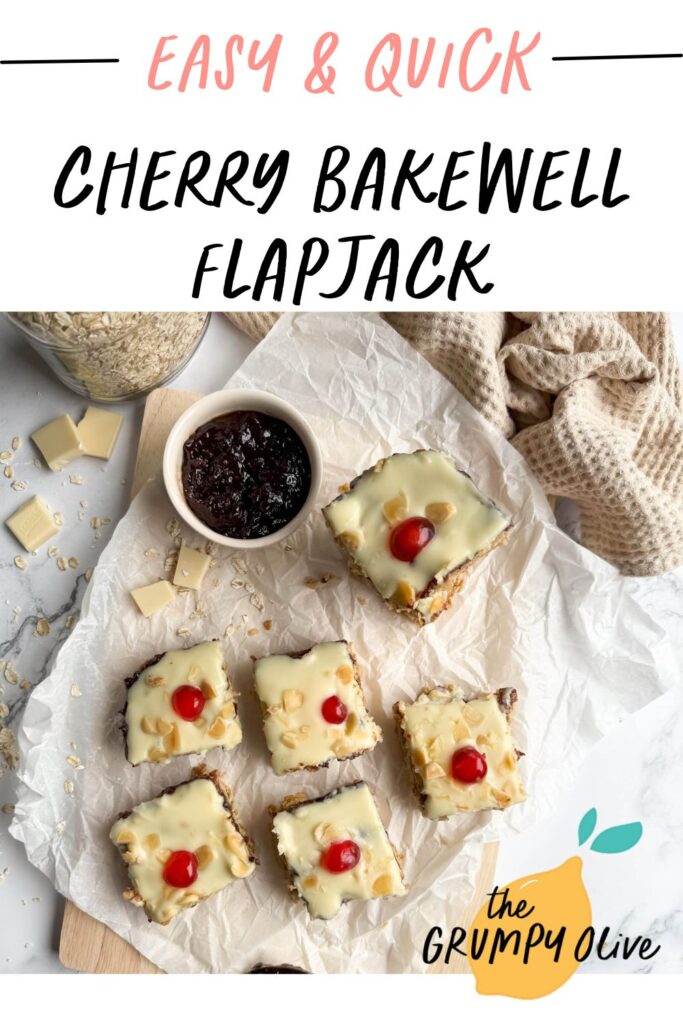

Cherry Bakewell Flapjack, Quick & Delicious Recipe
We love a good Bakewell tart, of course, in every single way, shape, or form. Nowadays, you think that a traditional Bakewell tart might be a bit boring, and while we really don’t think that, we thought this cherry Bakewell flapjack would be the perfect opportunity to dress it differently.
When it comes to baking, few treats can evoke the cozy nostalgia of an afternoon snack while blending modern flavors as seamlessly as a cherry Bakewell flapjack. Combining the rich, buttery texture of traditional flapjacks with the classic essence of the beloved Bakewell tart, this treat brings an elegant twist to the table.
Whether you’re a seasoned baker or a kitchen novice looking to expand your repertoire, understanding the nuances of this recipe can transform your approach to creating desserts that delight the senses.
Before we dive into the step-by-step exploration of this delicious cherry bakewell flapjack, it’s essential to appreciate the heritage that inspires it. The cherry Bakewell tart is deeply rooted in British culinary tradition, originating from the quaint town of Bakewell in Derbyshire. Its iconic combination of sweet almond flavors, jam, and pastry is a testament to the region’s penchant for comforting yet sophisticated desserts.
The humble flapjack, on the other hand, has a longstanding place in British kitchens as a hearty, oat-based snack. Born out of necessity as an energy-boosting treat for farmers and laborers, flapjacks have since evolved to become a versatile canvas for flavors both classic and contemporary.
The cherry Bakewell flapjack, therefore, marries the best of these two traditions. It takes the wholesome, chewy texture of a flapjack and infuses it with the signature almond and cherry notes of the Bakewell tart. The result? A layered, mouthwatering bar that’s perfect for afternoon tea or as a delightful treat anytime.

Let’s get this quick dessert of cherry Bakewell flapjack ready
Sometimes we all need a break from the madness of Christmas, especially when it comes to Christmas bakes and Christmas food. We get bombarded with so much so early, I like to take a different road sometimes and this is what happened with this brilliant cherry Bakewell flapjack. Let’s get making it together.
What is a Flapjack?
In British culinary terms, a flapjack is a sweet, tray-baked snack made primarily from oats, butter, sugar, and syrup. It is distinct from what North Americans might recognize as flapjacks, which are pancakes. The British flapjack is more akin to a chewy or crunchy granola bar, with a rich, buttery flavor and a dense, satisfying texture.
The ingredients are mixed and baked in a tray until golden brown, creating a versatile snack that can be customized with various additions like dried fruits, nuts, chocolate, or even spices. The result is a square or rectangular bar that is perfect for an afternoon treat or an energy boost.
The history of the British flapjack stretches back several centuries, rooted in the country’s use of oats as a staple food source. However, the word flapjack itself has evolved over time, with meanings changing significantly based on the context and region.
The term flapjack first appeared in English as early as the 16th century, though it originally referred to a flat tart or pancake, not the oat-based bar we know today. Shakespeare himself used the term in Pericles, Prince of Tyre, where it meant a kind of flat cake. The modern association with oat bars is a more recent development, likely cemented in the 20th century as oats became more popular for homemade treats.
Oats have a long-standing place in British cuisine, particularly in regions like Scotland, where the grain has been a staple due to its adaptability to the cooler climate. They were used in porridges and cakes long before the flapjack, just like this cherry Bakewell flapjack as we know it today became popular. As oats became more readily available and affordable, they were incorporated into various recipes aimed at providing a substantial, energy-rich snack.
The modern flapjack began to take shape in the 19th and 20th centuries as sugar and golden syrup became more commonly used in home kitchens. During this time, recipes for oat-based baked goods evolved to include these sweeteners, creating a more indulgent treat.
The flapjack gained traction as an energy-dense snack that was simple to make and could be stored for days without spoiling. This made it an ideal food for laborers and farmers, who needed reliable, homemade snacks that would sustain them throughout the day. Over time, the flapjack transitioned from being purely practical to becoming a popular treat enjoyed by people of all ages.
Today, flapjacks are a common sight in British bakeries, cafes, and homes. Their appeal lies in their simplicity and adaptability. While the classic flapjack sticks to the original oat, butter, sugar, and syrup formula, modern variations include additions like:
- Dried fruits such as raisins or cranberries for a chewy, tart contrast.
- Nuts and seeds for added texture and protein.
- Chocolate chips or a drizzle on top for a sweeter version.
- Spices like cinnamon or ginger for a warm, comforting twist.
Beyond the traditional preparation, flapjacks are now often tailored to suit dietary preferences, such as vegan or gluten-free versions that use plant-based fats or gluten-free oats.
While the British flapjack is unique in its oat-bar form, similar snacks can be found in other cultures, each adapting to local ingredients and preferences:
- Granola Bars (U.S.): These are perhaps the closest relative, often packed with oats, honey, and a variety of mix-ins like nuts and dried fruits;
- Muesli Bars (Australia and New Zealand): A blend of raw rolled oats, nuts, seeds, and dried fruit bound together by a sweetener;
- Cereal Bars (Europe): Similar to flapjacks, these may incorporate cereals like rice or cornflakes, with honey or syrup as a binder.
The British flapjack, with its simple yet deeply satisfying ingredients, stands as a testament to the resourcefulness of traditional cooking and the enduring appeal of homemade snacks. From its historical association with flat cakes and simple oat-based sustenance to its modern, varied incarnations, the flapjack continues to be a beloved treat. Its place in British culture is a reminder that sometimes the simplest recipes can have the most enduring legacy, adapting over time while holding true to their humble roots.
What is a Bakewell tart?
A Bakewell tart is a traditional English dessert consisting of a shortcrust pastry shell, a layer of jam, and a filling of frangipane – a sweet almond-flavored paste. The tart is often topped with flaked almonds or, in some modern versions, an icing glaze with a cherry on top. A bit like this delicious cherry Bakewell flapjack.
The Bakewell tart is named after the town of Bakewell, located in Derbyshire, England. The dessert has a history dating back to at least the 19th century, though its exact origins are somewhat debated. The story most commonly associated with the tart is that it was an accidental creation. Legend has it that in the 1860s, a cook at the White Horse Inn in Bakewell misinterpreted a recipe for a strawberry tart and instead layered a mixture of eggs, sugar, and ground almonds over a layer of jam before baking. The result was a hit among patrons, and the Bakewell tart was born.
Although these terms are often used interchangeably, a Bakewell tart and a Bakewell pudding are not the same. A Bakewell pudding is the older of the two and is made with a puff pastry base, with a layer of jam and an egg-almond topping that has a softer, more custard-like texture. The Bakewell tart, on the other hand, uses a shortcrust pastry and has a firmer frangipane filling that is baked to set. Here you can see the components of a traditional Bakewell tart:
- Shortcrust Pastry Base: The foundation of the tart, which should be buttery and crisp. This provides a sturdy structure that contrasts well with the soft filling;
- Jam Layer: Usually raspberry or cherry jam, spread thinly on the base before the frangipane is added. The jam brings a sweet and slightly tart element that balances the richness of the almond filling;
- Frangipane Filling: A mixture of ground almonds, sugar, butter, and eggs that creates a moist, flavorful layer with a subtle almond taste. This part of the tart is what sets it apart from other baked goods and gives it its distinctive flavor;
- Toppings: Traditionally, the tart may be sprinkled with flaked almonds before baking for an extra crunch. In some versions, it is finished with a layer of icing and a maraschino cherry for decoration, which gives it a more modern touch.
Over time, the classic Bakewell tart has seen numerous adaptations:
- Iced Bakewell: This version has a layer of white icing over the frangipane and is usually topped with a single glacé cherry;
- Chocolate Bakewell: Cocoa or melted chocolate can be added to the frangipane for a richer flavor;
- Fruit Variations: While raspberry jam or compote is traditional, other fruit preserves like strawberry, cherry, or apricot are often used to change the taste.
The Bakewell tart is not just a delicious dessert but a symbol of English culinary heritage. It is commonly enjoyed with a cup of tea and is a staple in British bakeries and home kitchens alike. Its popularity has persisted over the years, making it a classic that represents the balance between simplicity and elegance in British baking.
Whether served warm or at room temperature, a Bakewell tart’s combination of buttery pastry, sweet jam, and rich almond filling makes it a beloved treat that continues to be celebrated both in the UK and by baking enthusiasts around the world.

What ingredients do I need to make this cherry Bakewell flapjack?
Each of these ingredients contributes uniquely to the cherry Bakewell flapjack, providing layers of flavor, texture, and richness that make this dessert irresistible. Let’s take a look at the role each component plays in creating this delightful treat:
- Butter: Butter is essential for imparting richness and moisture to the cherry Bakewell flapjack. It binds the oats and other dry ingredients together and provides a velvety, luxurious texture. When melted with sugar and syrup, butter helps create the caramel-like base that lends the cherry Bakewell flapjack its chewy, satisfying bite. The use of high-quality unsalted butter ensures that the natural flavors of the other ingredients aren’t overshadowed by salt;
- Rolled Oats: Rolled oats are the backbone of the cherry Bakewell flapjack, providing structure and a hearty, chewy texture. Their slightly nutty flavor complements the sweetness of the other ingredients while soaking up the buttery syrup mixture, which helps bind the cherry Bakewell flapjack and maintain moisture. Rolled oats are preferred over quick oats as they retain their shape and provide a better bite;
- Maple Syrup: Maple syrup introduces a subtle, complex sweetness with hints of caramel and woodiness that pair beautifully with the almond and cherry flavors in the cherry Bakewell flapjack. It acts as a liquid sweetener, contributing to the moistness of the cherry Bakewell flapjack and enhancing the overall depth of flavor. The use of real maple syrup is important for achieving a rich, authentic taste;
- Brown Sugar: Soft brown sugar, rich in molasses, adds a deeper, more nuanced sweetness than white sugar. It complements the caramel notes of the maple syrup and butter, resulting in a warm, toffee-like base. The molasses content also contributes to the chewy texture that defines a good cherry Bakewell flapjack, ensuring that it remains soft in the center;
- Ground Almonds: Ground almonds – also known as almond flour – add a delicate, nutty undertone that echoes the flavor of a classic Bakewell tart. They help integrate the almond profile more seamlessly into the cherry Bakewell flapjack, enhancing both the flavor and the moisture content. Ground almonds also contribute to the density of the cherry Bakewell flapjack, making each bite more substantial and satisfying;
- Almond Extract: A small amount of almond extract goes a long way in infusing the entire cherry Bakewell flapjack with the unmistakable taste of almonds, which is central to the Bakewell profile. This concentrated flavor enhancer ensures that the almond notes are prominent without needing a large quantity of whole or ground almonds, keeping the balance of flavors intact;
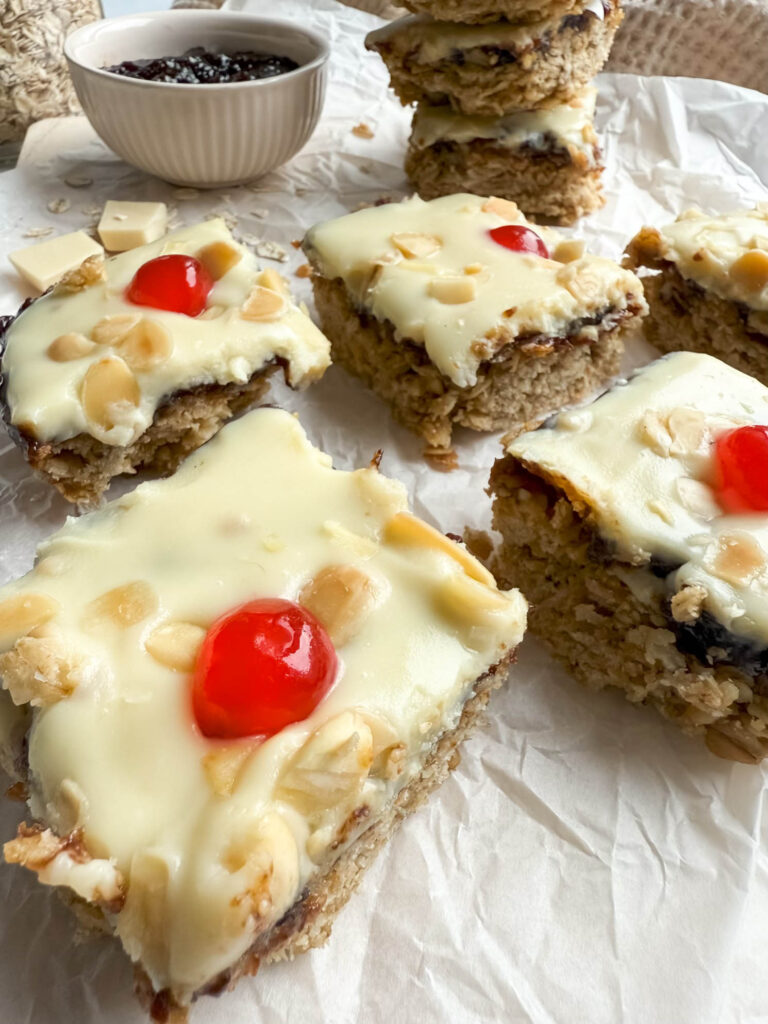
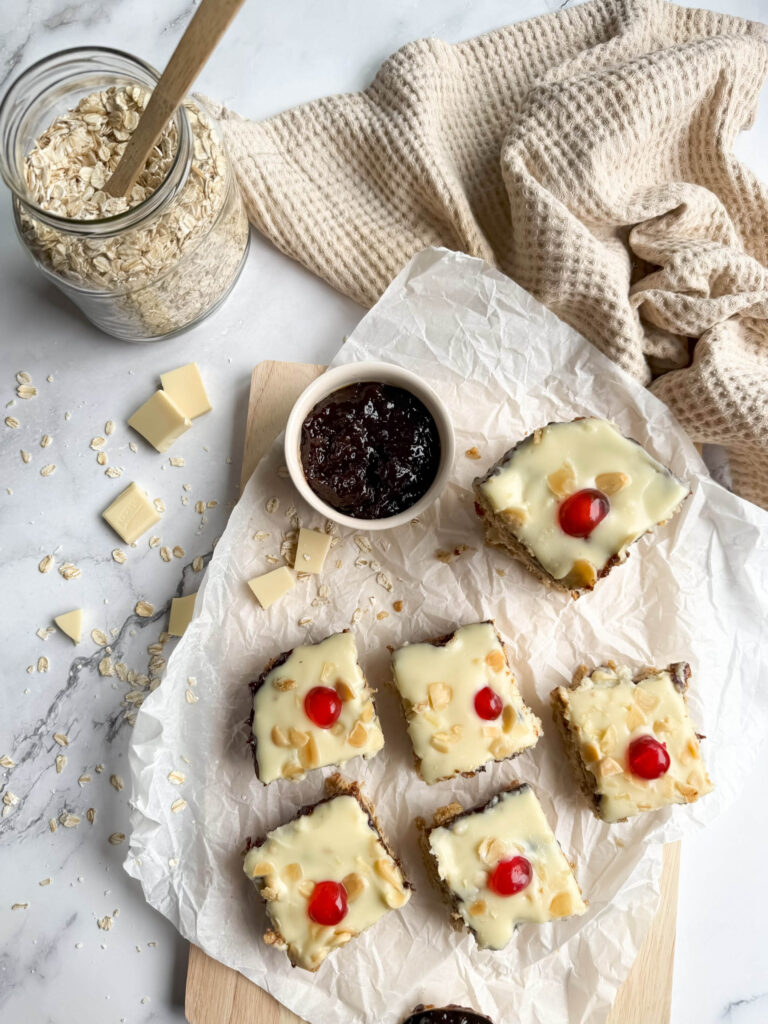
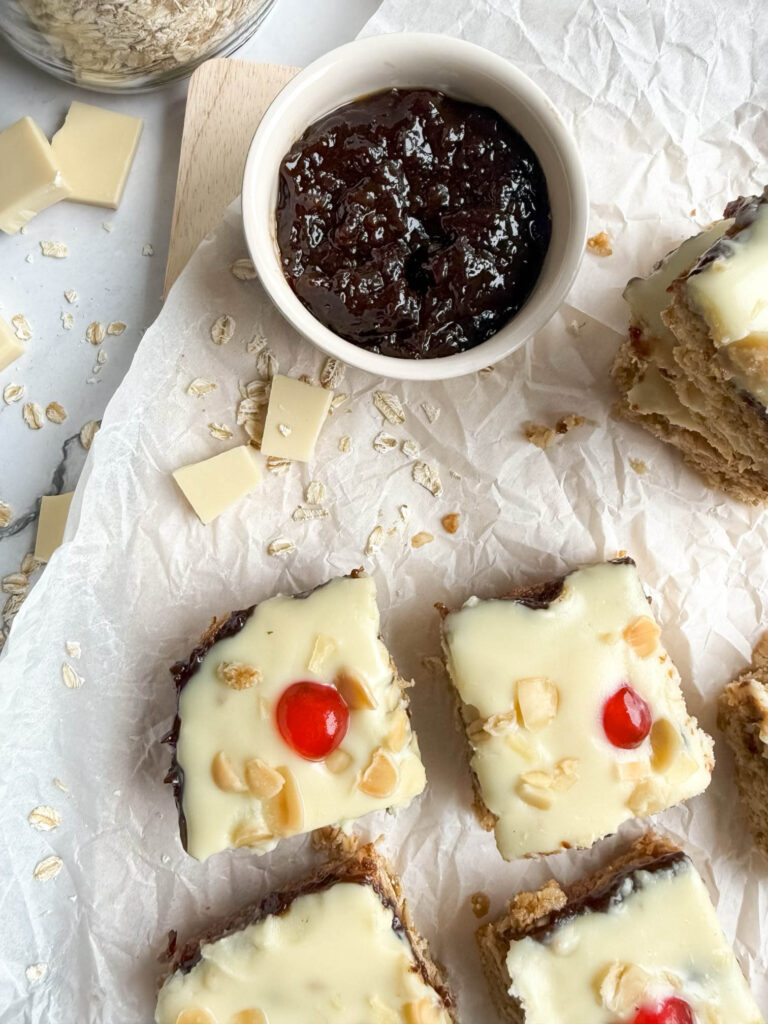
- Flaked Almonds: Flaked almonds provide a lovely crunch and a textural contrast to the otherwise chewy cherry Bakewell flapjack. Sprinkled on top after the icing goes, they add visual appeal and a layer of crispness to it. This addition mimics the traditional topping of a Bakewell tart and enhances the nutty profile;
- Cherry Jam: Cherry jam is the star that ties the Bakewell theme together. Its sweetness and slight tartness provide a vibrant middle layer that contrasts with the buttery oats and the subtle almond flavor. The jam cuts through the richness, creating a balanced bite that isn’t overwhelmingly sweet. Choosing a high-quality jam with real cherry pieces can add more texture and flavor complexity;
- White Chocolate: White chocolate is used, combined with the Greek yogurt, as a decorative topping on the cooled cherry Bakewell flapjack. Its creamy, sweet profile adds a touch of indulgence that pairs well with the tartness of the cherry jam and the nuttiness of the almonds. The contrast between the smooth white chocolate and the chewy oats makes for an enjoyable mouthfeel;
- Greek Yogurt: Greek yogurt might seem unconventional, but it works, combined with melted white chocolate, to create a tangy, creamy layer. Its slightly tart flavor offsets the sweetness of the other ingredients and brings a refreshing element that complements the cherry and almond flavors;
- Glacé Cherries: Glacé cherries are candied cherries that add bursts of sweet, jewel-like flavor throughout the cherry Bakewell flapjack. Their vivid red color makes them a visually striking addition, echoing the classic decoration of a Bakewell tart. We used them whole as a garnish, and they contribute a chewy texture and an extra layer of sweetness.
When these ingredients are combined, they create a multi-layered and flavorful cherry Bakewell flapjack. The buttery base, enhanced by the earthy rolled oats and caramel notes of brown sugar and maple syrup, serves as the perfect canvas for the almond extract and ground almonds. Cherry jam adds brightness and tartness, while the addition of white chocolate and flaked almonds ensures a variety of textures. Finally, Greek yogurt, white chocolate, and glacé cherries can be used for a decorative, tangy, and sweet finish, elevating the cherry Bakewell flapjack from a simple snack to a show-stopping treat.

Cherry Bakewell Flapjack

Ingredients
- For the flapjack
- 120 g butter
- 220 g rolled oats
- 80 g maple syrup
- 40 g brown sugar
- 40 g ground almonds
- 1 tsp almond extract
- For the topping
- 2 tbsp flaked almonds
- 4 tbsp cherry jam
- 100 g white chocolate
- 50 g Greek yogurt
- 9 gelé cherries
Instructions
- Preheat the oven to 180C, then grease a baking dish and line it with parchment paper.
- Melt the butter, then stir in the oats, maple syrup, brown sugar, ground almonds and almond extract.120 g butter, 220 g rolled oats, 80 g maple syrup, 40 g brown sugar, 40 g ground almonds, 1 tsp almond extract
- Spoon the mixture in the baking tray and flatten with a spatula.
- Bake for 20 minutes, or until golden.
- Cool completely before moving on to the topping.
- Melt the white chocolate, then mix in the greek yogurt.100 g white chocolate, 50 g Greek yogurt
- Spread the jam on the flapjack, then pour the chocolate and yogurt mix.4 tbsp cherry jam
- Spread it with a spatula, then decorate with the flaked almonds and gelé cherries.2 tbsp flaked almonds, 9 gelé cherries
- Put in the fridge for 2 hours to set, then cut into 9 portions.
Shop the cherry Bakewell flapjack recipe

Creating this cherry Bakewell flapjack is more than just baking; it’s an ode to the rich culinary traditions of British desserts infused with a modern, versatile approach. Whether you’re baking for friends, family, or simply to treat yourself, these flapjacks offer a satisfying combination of flavors and textures that capture the essence of a traditional Bakewell in a contemporary form.
With a foundation of rich, buttery oats, sweet cherry jam, and a hint of almond, each bite is a tribute to both simplicity and elegance. So, preheat your oven, line your baking tin, and get ready to embark on a baking experience that merges timeless British heritage with everyday indulgence.
Pin this cherry Bakewell flapjack for later!