

Vegan Mushroom Korma, The #1 Best Recipe
This post for the vegan mushroom korma was originally posted on 3rd March 2023.
Back when we first came out with this recipe for vegan mushroom korma, we were hoping that you’d come with an open mind because the recipe for this vegan mushroom korma was a little out of our comfort zone. We have a lot more experience with vegan food now, as per all the recipes we have shared in the many months between, so let’s see them together:
- A brilliant stuffed butternut squash roast as an alternative to your usual chicken or turkey roast;
- These super fun and delicious tofu nigiri;
- A vegan panna cotta you can decorate as you see fit, versatile and easy to make;
- Another super versatile recipe, this time for a vegan brioche loaf;
- These vegan hot chocolate cookies are the best of both worlds;
- The traditional Greek cookies, but vegan, the Kourabiethes;
- That mushroom Wellington everyone and their mum raves about;
- Slather that vegan brioche with this vegan clementine curd;
- Make it fall with these pumpkin brownies, all vegan of course;
- Some of the best vegan pancakes made with oat flour? Yes, please;
- My favorite quick sandwich, this vegan egg mayo;
- Amaretti cookies, but make it vegan? We got your back;
- A delicious vegan fall salad, packed with all the good stuff;
- These Asian-Inspired oyster mushroom burgers, easy and perfect all year round;
- Some extremely delicious, crunchy and perfectly spicy fried popcorn mushrooms;
- One of the easiest pasta recipe you’ll ever try, the vegan pumpkin and feta pasta;
- An easy pumpkin banana bread, delicious and super easy to whip up;
- This cheesy Violife sandwich, dairy free and yummy as heck;
- A super chocolatey and vegan Swiss roll, incredibly luscious;
- The most beautiful Biscoff cookies, vegan and easy but extremely good looking;
- Some of the easiest but most delicious apples caramelized with cinnamon and brown sugar you’ll ever find;
- And lastly, but hopefully ever-growing, the best vegan apple cider donuts we’ve ever tried.
One other point we did make while chatting about this creamy vegan mushroom korma was our love for Indian food, but we had never attempted to cook Indian. Ever. So this vegan mushroom korma is still my first-ever attempt at making one of my favorite curries – Korma! – at home. With no ready-made Korma sauce or even worse, from the warm-at-home shelf of a supermarket (aka ready meals).
I discovered Indian food when I moved to London in 2010. I remember one of our first flatmates making chicken Korma and I fell in love. Back then, she probably used a ready-made sauce, but to me, it tasted so special and new. And then we went to Dishoom, and my love for Indian food reached a new high. But, both sisters do not really enjoy it, so it’s usually a very rare treat.
But I have never thought about attempting to make curry by myself. Especially a vegan version like this vegan mushroom korma. To be fair, I had always seen curries as a humongous task that I would never be able to complete. And compete, because the taste has to be the real one. I am glad to confirm neither fears were true, and this beautiful vegan mushroom Korma is one I will be making over and over again. It was fragrant, spicy to the right point, and extremely delicious. So if you want to find out how to make it yourself, you are in the right place.
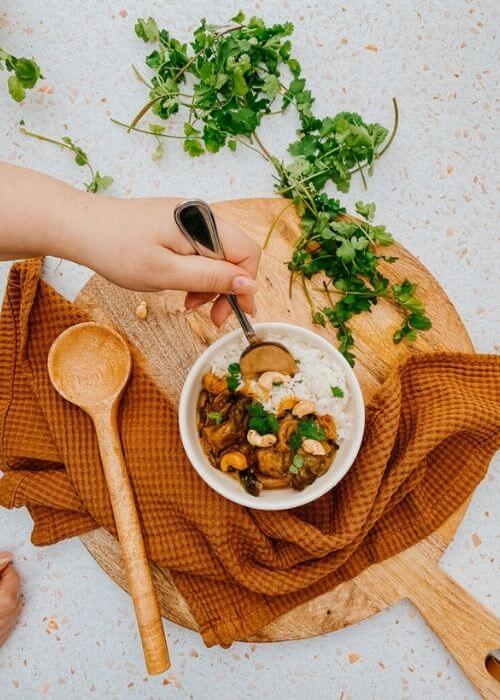
A brilliant recipe for the next Vegan Mushroom Korma curry
I love mushrooms, and so does everyone in this house. But this vegan mushroom korma brought the mushrooms to a whole different level for me. What I thought was going to be too soft and mushy, turned out to be absolutely dreamy and delicious. This mushroom korma recipe, as previously stated possibly, it’s one of those that’s going to be staying indefinitely. You’ll discover why once you try it yourself.
What is Korma?
By definition, Korma – or Kurma – is a mildly spiced Indian curry dish typically made with meat or vegetables, which are braised with yogurt, cream, or a nut-based paste. The sauce is seasoned with a variety of aromatic spices, including cumin, coriander, cardamom, and others, giving the dish its distinct taste. It has its roots in the Mughlai cuisine and it can be traced back as early as the 16th century.
There are various regional variations of korma, and the ingredients and preparation methods can vary. Some korma recipes use ground nuts or seeds, such as almonds or cashews, to thicken and enrich the sauce. The result is a savory and mildly spiced dish that is enjoyed with rice or bread, such as naan.
When it comes to the taste of this vegan mushroom korma, you can expect a mixture of spices, including coriander powder and cumin seeds, sweeter than your traditional curry, and also very much milder. Korma has become popular in many parts of the world, and different culinary traditions have adapted the recipe to suit local tastes.
We have made this vegan mushroom korma by replacing the protein with the mushrooms and the dairy with coconut milk. Very much a traditional version of the UK, the coconut gives this dish a sweeter note, milder than the original, but we did add some extra red chilli powder to keep that kick we so love!
How do you make your own Korma mix?
The curry base for the sauce for our vegan mushroom kurma is as traditional as we could get. We blended one onion with fresh garlic, fresh ginger, water, and our spices – ground cumin, ground coriander, ground turmeric, and garam masala – until a smooth paste was made. At the same time, you will brown your delicious mushrooms (we used a mix of those) in one tablespoon of coconut oil and set them aside. In the same pan and over medium heat, you will melt your other tablespoon of coconut oil and fry the chopped onions until they are starting to brown.
You will then add the paste, mix it in, and cook it for 2 to 3 minutes, until fragrant. You can now finally add the coconut milk and simmer it for 5 minutes. It will thicken, so you can now add the vegetable broth and cook it down for another 5 to 10 minutes. Now, and only now, you can add the mushrooms back in together with the cashews and mix them in. Cook them all together for 5 minutes and salt to taste.
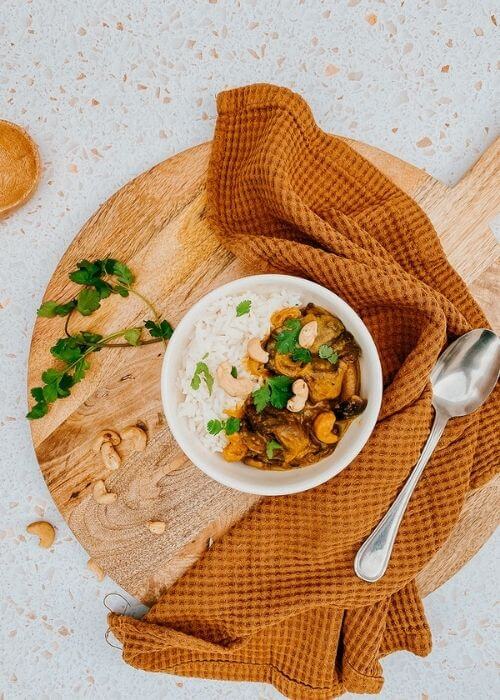
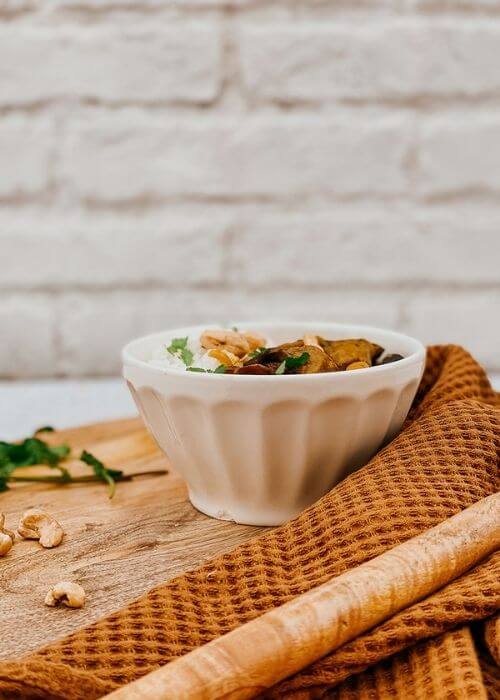
You can serve it on white rice with a sprinkle of freshly chopped coriander. Easy peasy for your new favorite vegan mushroom korma recipe!
What are mushrooms and are they good for you?
Mushrooms are fungi, and they belong to a diverse group of organisms that also include molds and yeasts. Unlike plants, mushrooms do not undergo photosynthesis; instead, they obtain nutrients through absorption. The visible part of a mushroom, commonly known as the fruiting body, is just a small part of the entire organism. The main body of the mushroom, called the mycelium, consists of a network of thread-like structures called hyphae, which are usually hidden beneath the soil or substrate.
Mushrooms come in a wide variety of shapes, sizes, and colors. They can be found in various habitats worldwide, from forests to grasslands to decaying wood. Some mushrooms are edible and are cultivated for culinary purposes, while others are toxic and can be harmful or even lethal if ingested. It’s essential to have a good understanding of mushroom species before consuming them, as misidentification can lead to serious health risks.
In addition to their culinary uses, mushrooms have been traditionally used in various cultures for medicinal and therapeutic purposes. Some mushroom species are being studied for their potential health benefits, such as immune system modulation, anti-inflammatory properties, and antioxidant effects.
Common edible mushrooms include:
- Button Mushrooms, Agaricus bisporus: These are the most commonly consumed mushrooms and include white button mushrooms, cremini, and portobello mushrooms;
- Shiitake, Lentinula edodes: Shiitake mushrooms have a rich and savory flavor. They are popular in Asian cuisine and are known for potential health benefits;
- Oyster Mushrooms, Pleurotus ostreatus: Oyster mushrooms have a delicate flavor and are often used in various dishes;
- Chanterelles, Cantharellus spp.: Chanterelles have a distinctive funnel shape and are prized for their fruity aroma and flavor;
- Porcini, Boletus edulis: Porcini mushrooms are highly sought after for their nutty and earthy flavor.
It’s crucial to be cautious when foraging for wild mushrooms, as some toxic varieties closely resemble edible ones. If you are uncertain about the safety of a mushroom, it’s best to seek guidance from an experienced forager or mycologist. Additionally, when buying mushrooms, it’s wise to purchase them from reputable sources to ensure their safety and quality.
Mushrooms are not only delicious additions to various dishes but also offer a range of health benefits.
Here are some notable aspects of mushrooms and their potential positive effects on health:
- Nutrient-rich: Mushrooms are low in calories but rich in essential nutrients, including B vitamins such as riboflavin, niacin, and pantothenic acid, minerals such as selenium, copper, and potassium, and antioxidants;
- Rich in Antioxidants: Mushrooms contain various antioxidants, including ergothioneine and selenium, which help to protect the body’s cells from damage caused by free radicals. Antioxidants play a role in supporting overall health and reducing the risk of chronic diseases;
- Source of Vitamin D: Some mushrooms, when exposed to sunlight or ultraviolet light during growth or processing, can produce vitamin D. Vitamin D is essential for bone health, immune function, and overall well-being;
- Immune System Support: Beta-glucans, found in certain mushrooms, have been linked to immune system modulation. These compounds may help in enhancing the immune response and reducing the risk of infections;
- Potential Anti-Inflammatory Properties: Some mushroom varieties, such as reishi and shiitake, are believed to have anti-inflammatory properties. Chronic inflammation is associated with various health conditions, and consuming anti-inflammatory foods may contribute to overall well-being;
- Support for Heart Health: The fiber, potassium, and antioxidants found in mushrooms may contribute to heart health. These components can help regulate blood pressure, reduce cholesterol levels, and support overall cardiovascular function;
- Digestive Health: Mushrooms are a good source of dietary fiber, which aids in digestion and promotes a healthy gut. Adequate fiber intake is associated with a lower risk of digestive issues and can contribute to weight management;
- Adaptogenic Properties: Certain mushrooms, like reishi and cordyceps, are considered adaptogens. Adaptogens are believed to help the body adapt to stress and maintain balance.
It’s important to note that while mushrooms offer numerous health benefits, individual responses can vary. Some people may be allergic to certain types of mushrooms, and some varieties can be toxic, so it’s crucial to know the types of mushrooms you are consuming and ensure they are safe for consumption.
As with any dietary considerations, it’s advisable to consult with a healthcare professional or a nutritionist for personalized advice, especially if you have specific health concerns or conditions.
Are there any tips for this mushroom korma?
As usual, my recommendation is to make sure you have all the ingredients for this vegan mushroom korma ready and prepped on hand. Mostly because it will actually cut on the time you’ll be spending making this mushroom korma. I had made a mess the first time (and the second and third times!) around, but once you have everything on hand it will be smooth sailing and you will enjoy this thoroughly. Especially when it comes to this mushroom Korma!
What ingredients do I need to make mushroom korma?
To make this korma you will need:
- coconut oil: adds richness, helps the spices create a curry base, as well as helping brown the mushrooms;
- mixed mushrooms: bring a meaty texture and deep umami that make the dish hearty and satisfying;
- white onions: form the sweet, aromatic backbone of the sauce once softened and caramelised;
- crushed garlic: adds depth and a zing to it;
- fresh ginger: helps loosen the blend of spices;
- cold water: helps loosen and blend the spices into a smooth paste at the start;
- ground cumin: adds earthy, warm notes;
- ground coriander: gives a citrusy, slightly sweet aroma that lightens and rounds the spice mix;
- ground turmeric: brings warmth and earthy bitterness;
- garam masala: adds complexity and finish to the spice mix;
- chilli flakes: provide heat and a kick;
- coconut milk: adds creaminess and silkiness;
- vegetable stock: builds a savory depth and thins the sauce to the right consistency;
- raw cashews: adds a nutty sweetness and crunch;
- salt: enhances and ties together the flavor;
- fresh coriander: adds brightness just before serving.
How to make mushroom korma
Start this easy mushroom korma curry recipe by blending one onion with fresh garlic, fresh ginger, water and spices – ground cumin, ground coriander, ground turmeric and garam masala – until a smooth paste is made.
Brown the mixed mushrooms in one tablespoon of coconut oil, and set aside. In the same pan and over medium heat, melt the other tablespoon of coconut oil and fry the chopped onions until they are starting to brown.
Add the paste and mix it in, and cook it for 2 to 3 minutes, until fragrant. Add the coconut milk and simmer it for 5 minutes. It will thicken, so you can now add the vegetable broth and cook it down for another 5 to 10 minutes.
Finally, add the mushrooms back in together with the cashews (or ground almonds) and mix them in. Cook them all together for 5 minutes and salt to taste. Enjoy your easy mushroom korma!
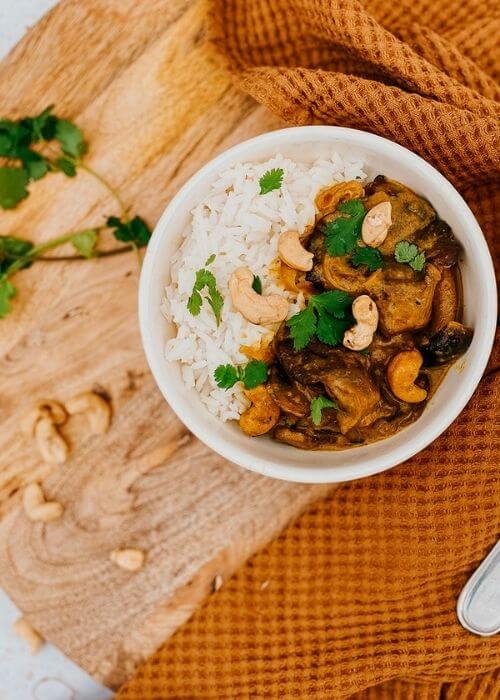
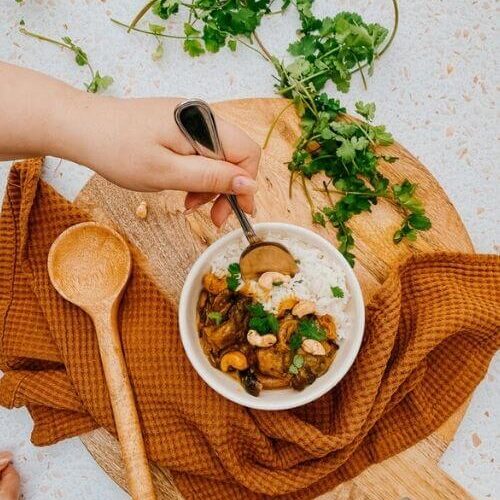
Vegan Mushroom Korma
Ingredients
- 2 tbsp coconut oil
- 400 g fresh mushroom mixed
- 2 small white onions
- 2 tbsp crushed garlic
- 2 tbsp fresh ginger peeled and grated
- 2 tbsp cold water
- 2 tsp ground cumin
- 2 tsp ground coriander
- 1 tsp ground turmeric
- 1 tsp garam masala
- ¼ tsp red chili flakes or powder
- 1 cup full fat coconut milk
- 1 ½ cup vegetable stock
- ¼ cup raw cashews
- 1 tsp salt
- fresh coriander to garnish
Instructions
- Blend one onion with fresh garlic, fresh ginger, water and spices – ground cumin, ground coriander, ground turmeric and garam masala – until a smooth paste is made.
- Brown the mixed mushrooms in one tablespoon of coconut oil, and set aside.
- In the same pan and over medium heat, melt the other tablespoon of coconut oil and fry the chopped onions until they are starting to brown.
- Add the paste and mix it in, and cook it for 2 to 3 minutes, until fragrant.
- Add the coconut milk and simmer it for 5 minutes. It will thicken, so you can now add the vegetable broth and cook it down for another 5 to 10 minutes.
- Finally, add the mushrooms back in together with the cashews and mix them in. Cook them all together for 5 minutes and salt to taste.
Notes
Shop the vegan mushroom korma recipe post

So that is the end of this post on the vegan mushroom Korma recipe!
This vegan mushroom korma is brilliant, and bound to become a favorite! If you did love this mushroom korma so much, how about trying this vegan mushroom Wellington too?
Pin this vegan mushroom korma recipe for later!



This sounds delicious! I love Indian food and I love kormas, so this would be an excellent Vegan alternative that’s super easy to make at home!
I couldn’t believe how easy it was!
The mushroom korma looks delicious and I definitely want to try it for myself! I also love that it’s vegan! Thanks for sharing the recipe!
I love it so much I hope you do enjoy it too xx