
Adorable Christmas Gingerbread Ornaments, Easy & Quick
This post for the Christmas gingerbread ornaments was initially published on 19 December 2016.
This post for the Christmas gingerbread ornaments was one we published back in 2016, when The Grumpy Olive had been around for roughly three years and we had just been learning all we could about blogging. We were definitely not as good as we might be one day in the not-so-distant future, but one thing hasn’t really changed: these Christmas gingerbread ornaments are still as delicious as they were.
Mainly because we had tried this recipe time and time again before we got it right, maybe we were just besotted with the idea of getting a recipe out on our own. Who knows, right? Originally we hadn’t even decorated them as we thought it was going to take ages, but I can confirm now I quickly decorated these christmas tree ornament in no time, so you can do it too.
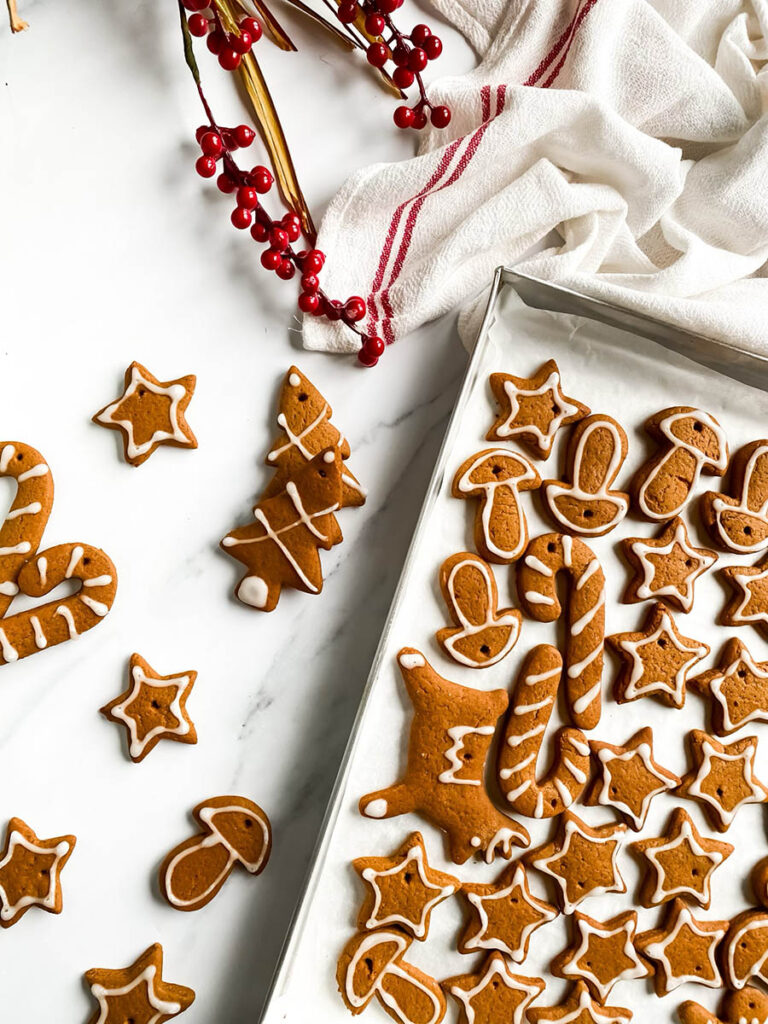
Are these Christmas gingerbread ornaments perfect? Absolutely not. Did I have a blast decorating these christmas ornaments all by myself in less than two hours? Yes, I did, of course. They might not be perfect, they might not be state-of-the-art Christmas gingerbread ornaments, but they are beautiful to me and that’s all that counts.
There is still plenty of time left for Christmas, but of course, we are very excited, and this is honestly an understatement: we are super ready for Christmas, already looking at decks and such, and don’t even get us started on food. Our mum has been planning the menu since September, so you can imagine how important this holiday is for us. We’re not really religious people, but we do cherish the time we get to spend together without having to work, so we always try to make it special.
And these christmas gingerbread ornaments diy are what you need to make your tree look extremely special too, I tell you. Just make sure these Christmas gingerbread ornaments are far from your pets and we’re all good.
Let the Christmas decoration madness commence: Meet the Christmas gingerbread ornaments
These unique christmas gingerbread ornaments are a festive and delicious way to add a touch of warmth and tradition to holiday decorating. These edible decorations are often made from spiced gingerbread dough and cut into seasonal shapes like stars, hearts, or the classic gingerbread man.
After baking, the Christmas gingerbread ornaments are decorated with icing, sprinkles, and sometimes candy, making them both beautiful and unique. Traditionally, they are hung on Christmas trees with ribbons or used as charming gifts.
What is gingerbread and what is its origin?
Gingerbread is a delightful and versatile treat with a rich history, unique flavors, and cultural significance. We even made a gingerbread syrup you might want to check out.
The origins of gingerbread can be traced back to ancient Greece and Egypt, where it was used in religious ceremonies. However, the version we are more familiar with today began evolving in Europe during the Middle Ages when ginger and other spices became more widely available.
In Medieval Europe, for example, gingerbread was often shaped into elaborate figures or used as a canvas for intricate designs. It was sold at fairs and markets, where it became popular, especially in Germany, France, and England. The tradition of making gingerbread houses, which likely originated in Germany in the 16th century, was popularized by the Brothers Grimm’s fairy tale Hansel and Gretel. This connection to childhood stories and holiday traditions gives gingerbread a deep nostalgic significance.
Gingerbread is closely associated with the Christmas season. In many cultures, gingerbread cookies, cakes, and houses are crafted as a part of festive celebrations, often decorated with icing and candies, just like we did with these Christmas gingerbread ornaments: hand decorated and either eaten or hung to decorate the Christmas tree!
This special type of cookie is made using unique ingredients which get it to taste so special. For example, gingerbread has a characteristic warm and spicy flavor from ginger, cinnamon, cloves, and nutmeg. This mix of spices makes it distinct from other cookies or cakes. Then it comes to the sweet side of this recipe: traditional recipes often use molasses or honey as the sweetener, giving gingerbread its rich, deep flavor.
In some regions, gingerbread is more like a soft, spiced cake. For example, Lebkuchen from Germany and Pain d’épices from France are famous variations. These ones, the crisp, thin gingerbread cookies are popular for decorating. They are cut into shapes, such as stars, hearts, and the iconic gingerbread man. We love those, and you can see it from these Christmas gingerbread ornaments.
Of course, though, different countries have their own take on gingerbread. In Scandinavia, pepparkakor are thin and crispy gingerbread cookies, while in Poland, pierniki are soft and often filled with jam or fruit.
Gingerbread has long been used to tell stories or symbolize important cultural narratives. For example, in some regions, gingerbread was shaped into religious figures or intricate patterns for special occasions. In some European traditions, elaborately decorated gingerbread hearts were exchanged as tokens of love and affection during festivals.
Ginger – is that good for you?
Ginger is a powerful spice that has been used for centuries in traditional medicine, especially in Asian, Indian, and Middle Eastern cultures. Modern research supports many of these uses, as ginger contains bioactive compounds that have numerous health benefits. Let’s explore the health benefits of ginger in detail.
- Anti-Inflammatory and Antioxidant Properties
- Gingerol, the main bioactive compound in ginger, has potent anti-inflammatory and antioxidant effects. This is important because chronic inflammation can contribute to a variety of diseases, such as heart disease, diabetes, and cancer;
- Antioxidants in ginger help neutralize free radicals, which can damage cells and contribute to aging and disease. By reducing oxidative stress, ginger promotes overall cellular health;
- Digestive Health and Nausea Relief
- Relieves Nausea: One of the most well-known benefits of ginger is its ability to relieve nausea and vomiting. This makes it particularly effective for:
- Morning sickness during pregnancy: Studies show that ginger can significantly reduce nausea in pregnant women, with doses ranging from 1 to 1.5 grams;
- Motion sickness: Ginger has been found to be as effective as certain medications in reducing symptoms of nausea and dizziness caused by motion;
- Post-operative nausea: Ginger can also help reduce nausea following surgery, as well as nausea caused by chemotherapy treatments;
- Improves Digestion: Ginger can enhance digestive function by speeding up the emptying of the stomach, known as gastric emptying. This can relieve discomfort for people with dyspepsia (chronic indigestion) and reduce bloating and gas;
- Relieves Nausea: One of the most well-known benefits of ginger is its ability to relieve nausea and vomiting. This makes it particularly effective for:
- Pain Relief, Especially for Arthritis
- Ginger has been used as a natural remedy for pain, particularly osteoarthritis and rheumatoid arthritis. Research shows that the anti-inflammatory properties of ginger can help reduce joint pain and stiffness, particularly in people suffering from osteoarthritis in the knee;
- Some studies suggest that ginger can be as effective as non-steroidal anti-inflammatory drugs (NSAIDs) like ibuprofen but with fewer side effects;
- The gingerol and shogaol compounds in ginger are believed to be responsible for these anti-inflammatory effects;
- Heart Health
- Ginger’s anti-inflammatory and antioxidant properties may benefit cardiovascular health by:
- Lowering blood pressure: Studies suggest ginger can help reduce high blood pressure by acting as a natural vasodilator (widening blood vessels). This improves blood flow and reduces the strain on the heart;
- Reducing cholesterol: Ginger has been found to lower levels of LDL cholesterol (often referred to as “bad” cholesterol) and triglycerides, both of which are risk factors for heart disease;
- Preventing blood clots: Ginger contains natural salicylates, which can act like a blood thinner and help prevent blood clots, reducing the risk of strokes and heart attacks;
- Ginger’s anti-inflammatory and antioxidant properties may benefit cardiovascular health by:
- Lowers Blood Sugar and Supports Diabetes Management
- Some studies indicate that ginger can have anti-diabetic properties. It can help lower blood sugar levels and improve markers of insulin sensitivity, which is essential for managing Type 2 diabetes;
- It may also improve HbA1c levels (a marker of long-term blood sugar levels), which is crucial for diabetes management;
- Menstrual Pain Relief
- Ginger is a natural remedy for menstrual pain or dysmenorrhea. In some studies, it was shown to be as effective as conventional pain medications like ibuprofen in reducing pain during the menstrual cycle;
- It works by reducing the production of prostaglandins, which are responsible for triggering pain and inflammation;
- Supports Immune System and Fights Infections
- The active compounds in ginger, particularly gingerol, can help protect against infections. Ginger is effective at inhibiting the growth of many different types of bacteria, making it useful for fighting respiratory infections and oral health issues;
- Anti-bacterial properties: Studies show ginger is particularly effective against harmful bacteria in the mouth that cause gum diseases, such as gingivitis and periodontitis;
- Cold and flu relief: Ginger is often used in traditional medicine as a remedy for colds and flu. Its warming properties help improve circulation, reduce symptoms, and speed up recovery;
- Anti-Cancer Properties
- Emerging research suggests that ginger may have anti-cancer effects due to its high levels of antioxidants and anti-inflammatory compounds. Gingerol has been studied for its ability to reduce the growth of several types of cancer, including colorectal, ovarian, pancreatic, and breast cancers;
- While more research is needed, some studies indicate that ginger may help reduce inflammation in the body and inhibit the spread of cancer cells;
- Brain Health and Cognitive Function
- Chronic inflammation and oxidative stress are major contributors to age-related cognitive decline, such as Alzheimer’s disease. The antioxidants and bioactive compounds in ginger may help reduce these effects;
- Improves Skin Health
- Due to its anti-inflammatory and antioxidant properties, ginger can improve skin health by reducing acne, promoting a clearer complexion, and soothing irritated skin;
- It also stimulates blood circulation, which can give the skin a more radiant and healthy appearance;
- Potential to Improve Respiratory Function
- Ginger’s warming and anti-inflammatory properties make it beneficial for respiratory issues like asthma. It helps to relax the airway muscles, reducing symptoms like wheezing and shortness of breath;
- Supports Liver Health
- Ginger may have a protective effect on the liver, especially in individuals with fatty liver disease. Studies suggest that ginger can help reduce inflammation and oxidative stress in the liver, promoting healthier liver function.



Fun facts about gingerbread anyone?
I love all things gingerbread, especially when I started making these Christmas gingerbread ornaments. So it was only apt I started sharing with you all I found out in my quest to discover the history of gingerbread.
- Gingerbread as a Courtship Token (Germany): In Germany, especially at festivals like Oktoberfest and Christmas markets, people often exchange Lebkuchenherzen – large, heart-shaped gingerbread cookies decorated with colorful icing and sweet phrases. These cookies are sometimes given as tokens of love and affection;
- The World’s Largest Gingerbread House (USA): In 2013, a group of builders in Texas constructed the world’s largest gingerbread house. Measuring 60 feet long and 20 feet high, the house used around 1,800 pounds of butter, 7,200 eggs, 3,000 pounds of sugar, and over 22,000 pieces of candy for decoration. It was large enough for people to walk inside, and I would have happily moved in if I could;
- Gingerbread Husbands (England): In parts of England during the 17th century, unmarried women would eat gingerbread husbands hoping it would help them find a real husband. These gingerbread cookies were shaped like men and were thought to bring good luck in love. I might have missed my chance, yet I always enjoy a good gingerbread man…;
- The Gingerbread Capital: Nuremberg, Germany: Nuremberg, Germany, is considered the Gingerbread Capital of the World and has been producing gingerbread, or Lebkuchen, for centuries. The city has a long tradition of making and exporting beautifully crafted gingerbread, especially during the holiday season;
- Royal Gingerbread Connection (England): Gingerbread has been tied to English royalty since the time of Queen Elizabeth I. It is said that she had gingerbread figures made to resemble important guests at her court, using them as edible portraits. Bring on the new Christmas tradition of having gingerbread portraits of the family;
- Gingerbread Fairs in Medieval Europe: In Medieval Europe, gingerbread was often sold at fairs and markets. These fairs became so popular that some cities even named them after the treat, like the Gingerbread Fair in Toruń, Poland, which dates back to the 14th century and is still celebrated today;
- Hansel and Gretel’s Influence (Germany): The tradition of building gingerbread houses likely started in Germany in the 1800s, inspired by the Grimm Brothers’ fairy tale Hansel and Gretel. The story featured a house made of candy and gingerbread, sparking the idea of recreating similar houses during the Christmas season;
- Gingerbread and the Olympics (Norway): In Norway, the city of Bergen is famous for creating the world’s largest gingerbread city every year, called Pepperkakebyen. Local schools, businesses, and families build mini gingerbread houses, shops, and buildings to create a detailed and festive town, which is particularly popular during the holiday season;
- Ageing Like Fine Wine (Poland): In Poland, a special type of gingerbread called pierniki is made, particularly in the city of Toruń. Some pierniki are aged for months, or even years, before being eaten or decorated. The dough is often stored in cool places for long periods to allow the flavours to develop fully;
- Spicy but not Hot (France): In France, pain d’épices is a famous version of gingerbread that dates back to the 16th century. However, it’s not quite as spicy as other gingerbread recipes, focusing on the sweeter side with flavours of honey, anise, and citrus. It’s a staple at Christmas markets and is often paired with foie gras;
- The Gingerbread Man Story (USA): The famous folk tale of the Gingerbread Man, who comes to life and runs away from everyone trying to eat him, is a popular story in the United States. This tale has further embedded gingerbread into the culture as not just a holiday treat, but a storybook character, *wink wink* to you Shrek;
- Gingerbread Contests and Competitions: Gingerbread house-making contests have become a popular tradition around the world, especially in the United States. One of the largest annual events is the National Gingerbread House Competition held in North Carolina, which features incredibly elaborate and artistic designs.
These fun facts show just how versatile, beloved, and historically rich gingerbread is across different cultures!
What is icing?
Icing is a sweet, creamy topping used to decorate and enhance the flavour of cakes, cookies, and other baked goods. It typically consists of powdered sugar mixed with a liquid like water, milk, or butter, and can be flavoured with vanilla, chocolate, or other extracts.
There are various types of icing, including buttercream, which is smooth and creamy, and royal icing, which dries hard and is perfect for intricate decorations on cookies like these Christmas gingerbread ornaments. Glaze icing is thinner and creates a shiny finish when poured over pastries, while fondant is rolled out for a smooth, elegant coating on cakes.
Icing adds both visual appeal and extra sweetness to desserts, making it an essential element in baking. And I am sure you’ll love to decorate these Christmas gingerbread ornaments!
What ingredients do I need to make these Christmas gingerbread ornaments?
Each ingredient in this recipe for the Christmas gingerbread ornaments plays an important role in creating the flavour, texture, and structure of the dough. Let’s see these ingredients together.
- Unsalted Butter: Butter provides richness and moisture to the dough, giving the gingerbread its tender, slightly chewy texture. Unsalted butter is typically used to allow more control over the amount of salt in the recipe. It adds a subtle, creamy flavour that balances out the sweetness and spices;
- Brown Sugar: Brown sugar contains molasses, which adds moisture and gives gingerbread a deeper, more caramelized sweetness compared to white sugar. The molasses in brown sugar enhances the warm, rich flavour of the gingerbread, adding to its characteristic taste;
- Molasses: Molasses is key in giving gingerbread its dark colour and signature depth of flavour. It also adds moisture, helping to create a soft dough that holds together well for shaping. It contributes a robust, slightly bittersweet taste that complements the spices and brown sugar;
- Egg: The egg acts as a binder, holding the Christmas gingerbread ornaments dough together and providing structure. It also adds richness and contributes to the softness of the final baked product. While eggs don’t significantly impact the flavour, they help achieve the right texture and consistency;
- Water: Water is used to help moisten and bind the dry ingredients together, ensuring the dough is pliable and easy to roll out. Water itself doesn’t affect the flavour but is essential for achieving the right dough consistency;
- Flour: Flour provides the bulk of the dough’s structure. It forms the base that holds all the other ingredients together, giving the Christmas gingerbread ornaments its sturdy shape, which is important for these Christmas gingerbread ornaments. Flour is relatively neutral in flavour but gives gingerbread its substance and texture;
- Ground Ginger: Ginger is the star spice in Christmas gingerbread ornaments, giving it its signature warm, slightly spicy flavour. This spice adds heat and warmth, balancing the sweetness from the sugar and molasses, and contributing to gingerbread’s distinct taste;
- Cinnamon: Cinnamon enhances the overall spice profile of the gingerbread and provides warmth that complements the other spices. Known for its sweet, woody flavour, cinnamon rounds out the spiciness and adds a festive, comforting aroma;
- Nutmeg: Nutmeg adds a subtle, earthy warmth to the spice mix, enhancing the complexity of the Christmas gingerbread ornament i8 flavour. Its nutty, slightly sweet flavour pairs well with cinnamon and ginger, adding depth to the overall spice blend of the Christmas gingerbread ornaments;
- Allspice: Allspice gives an additional layer of warmth and spiciness, almost combining the flavours of cinnamon, cloves, and nutmeg. With its rich, peppery notes, allspice elevates the spiciness of the Christmas gingerbread ornaments without overpowering the other flavours;
- Baking Soda: Baking soda is the leavening agent in the Christmas gingerbread ornaments, helping the dough rise slightly and preventing it from becoming too dense. It also helps the Christmas gingerbread ornaments to spread and puff up as it bakes. Baking soda doesn’t add flavour but plays a crucial role in texture and browning;
- Salt: Salt enhances the flavours of the other ingredients, especially the sweetness and spiciness. It helps balance out the sweetness from the sugar and molasses in the Christmas gingerbread ornaments. Though subtle, salt sharpens and brings out the flavours of the ginger and spices, making the gingerbread taste more vibrant.
Together, these ingredients work harmoniously to create the perfect balance of spice, sweetness, and structure that defines classic Christmas gingerbread ornaments.

Christmas Gingerbread Ornaments

Ingredients
For the gingerbread
- 115 g unsalted butter softened
- 160 g brown sugar
- 110 g molasses
- 1 egg
- 2 tbsp water
- 335 g flour
- 2 tsp ginger ground
- ½ tsp cinnamon ground
- ½ tsp nutmeg ground
- ½ tsp allspice ground
- 1 tsp baking soda
- ½ tsp salt
For the icing
- water
- icing sugar
Instructions
- In the bowl of your standing mixer cream the butter and sugar until light and fluffy.115 g unsalted butter, 160 g brown sugar
- Add the molasses, egg and water and combine.110 g molasses, 1 egg, 2 tbsp water
- Now add all the dry ingredients: the flour, ground spices, baking soda and salt, and mix until everything comes together.335 g flour, 2 tsp ginger, ½ tsp cinnamon, ½ tsp nutmeg, ½ tsp allspice, 1 tsp baking soda, ½ tsp salt
- Remove the dough from the bowl and divide into two chunks.
- Flatten them and cover with cling film, then refrigerate for at least 1 hour or even overnight.
- When you are ready, preheat the oven to 180C.
- Prepare a baking dish with parchment paper and set aside.
- On a floured surface, roll out the dough to 3mm thick and cut all the shapes you can.
- Repeat this process with both chunks of dough and with all the dough scraps.
- Place your cookies on the prepared tray, leaving some space between them, and using a toothpick, create a hole in each cookie.
- Bake them for 8-10 minutes.
- Cool them down completely on a wire rack.
- Once completely cool, mix your icing sugar with enough water to get a not-so-thin icing, then decorate.water, icing sugar



Shop the Christmas gingerbread ornaments recipe

Of course, with Christmas now fully underway, it’s time to check out some other Christmas recipes including:
- starting with these brilliant savoury shortbread, you won’t stop snacking on them;
- these delicious Greek (& vegan!) Kourabiethes cookies;
- this cranberry whipped feta, brilliantly savoury and Christmassy;
- these vegan Linzer cookies which are delicious if you fancy;
- a yummy Brussels sprouts galette, irresistible;
- this inspo post on Christmas breakfast;
- the Christmas focaccia you did not know you needed;
- a lovely no-bake fudge, of course;
- the yummiest peppermint mocha martini, party in a glass;
- this cranberry rosemary chicken roast, so good you’ll be licking your fingers;
- Couscous stuffed butternut squash perfect if you host a big gathering and need a vegan option;
- Vegan mushroom Wellington, another vegan option that has nothing to lose on its meat counterpart;
- Vegan clementine curd a delicious way to lather your sweet treats or to gift;
- Gingerbread Pavlova take a classic with a christmas twist;
- Salted caramel Yule log a sweet treat can never be missed;
- Maple cranberry Bourbon cocktail to wash off all the food in a merry way;
- Jalapeño cranberry meatballs for a spiced up second course on your holiday table;
- Baileys Eggnog a classic with a twist for a boozy holiday season.
Alas, that’s the end of this post about the Christmas gingerbread ornaments. Incorporating these classic ingredients into your Christmas gingerbread ornaments not only brings out the rich, spicy flavours we all love during the holiday season but also ensures a sturdy, delicious dough that’s perfect for shaping and decorating.
Whether you’re hanging these Christmas gingerbread ornaments on the tree or gifting them to loved ones, these homemade Christmas gingerbread ornaments fill your home with the warm aroma of cinnamon, ginger, and molasses, adding a touch of festive magic to your celebrations. Enjoy the process of baking, decorating, and sharing these charming treats – it’s a timeless holiday tradition that’s as fun as it is delicious!
Pin these Christmas gingerbread ornaments recipe for later!