

Easy Gingerbread Cookies For Dogs, 6 Ingredients Only
These gingerbread cookies for dogs recipe was first published on October 28, 2024.
If you are a dog owner, you know it’s bound to happen that your dog will want in on anything you make, even the silliest of sandwiches. We knew we had to come up with a solution to eating our weight in gingerbread this coming Christmas, and these easy gingerbread cookies for dogs are the one.
Mainly because we have very eager dogs who love food, but we always struggle to resist the urge to get them to try everything. I know, bad parenting right here. But we’re also always checking on Google whether or not something can be fed to them, so we discovered most spices are no good, especially ones that go in gingerbread.
So what do you do when you’re a dog mum to dogs who want to try every single thing coming in and out of your oven? You create bespoke recipes for them, just like these gingerbread cookies for dogs. And whether that’s the beginning of a new section of this blog or not, we will never know. We just are going to start by sharing another Christmas recipe, this time it’s gingerbread cookies for dogs.
Creating gingerbread cookies for dogs is a fun, festive way to include your furry friend in holiday treats safely. Traditional gingerbread often includes ingredients like nutmeg, or sugar, which aren’t ideal for dogs. Pet-friendly versions usually focus on simple, dog-safe ingredients like whole wheat or oat flour, ginger, cinnamon, and a touch of honey or unsweetened applesauce for sweetness. Peanut butter (without xylitol) is sometimes added for extra flavor and protein.
Just roll out the dough, cut into cute shapes, and bake at a low temperature until they’re firm. Dogs will love the smell and taste of these homemade treats, and you can feel good knowing they’re free from additives and unnecessary sugars.
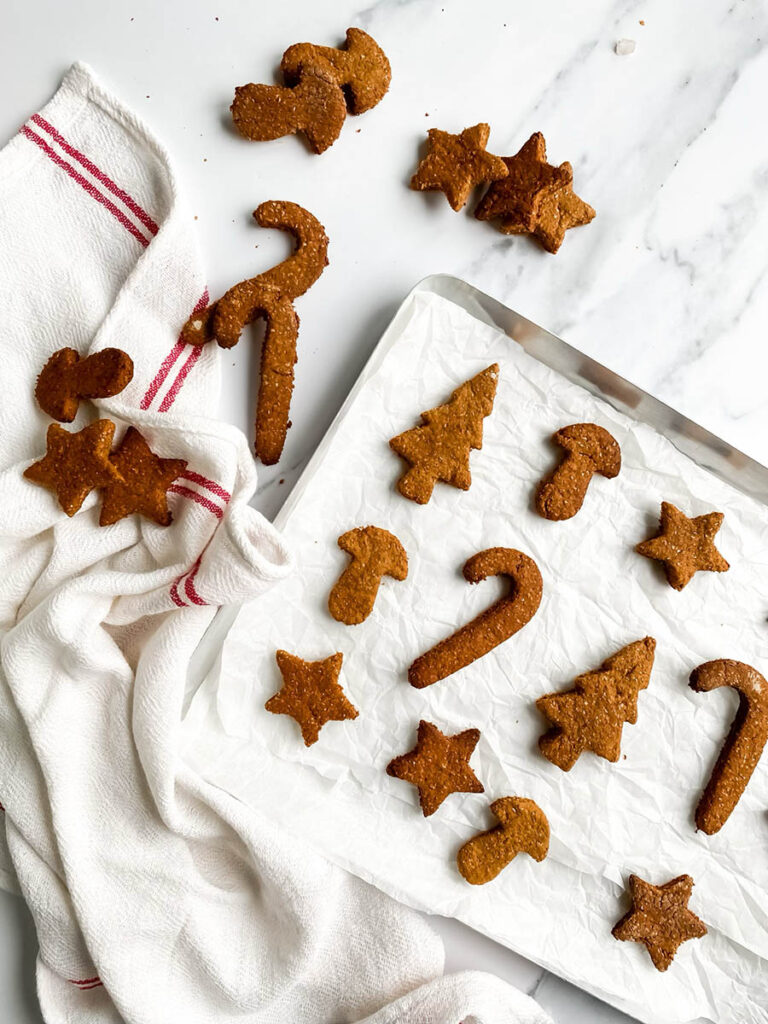
Your puppy will be as happy as it gets with these gingerbread cookies for dogs, just like ours were
December is not too far off, so these gingerbread cookies for dogs are about to become a useful treat to be dishing out for your 4 legged friends. Let’s see how to make them together.
What is gingerbread?
Just like we said in the post for the gingerbread ornaments, gingerbread is a delightful and versatile treat with a rich history, unique flavors, and cultural significance.
The origins of gingerbread can be traced back to ancient Greece and Egypt, where it was used in religious ceremonies. However, the version we are more familiar with today began evolving in Europe during the Middle Ages when ginger and other spices became more widely available.
In Medieval Europe, for example, gingerbread was often shaped into elaborate figures or used as a canvas for intricate designs. It was sold at fairs and markets, where it became popular, especially in Germany, France, and England. The tradition of making gingerbread houses, which likely originated in Germany in the 16th century, was popularized by the Brothers Grimm’s fairy tale Hansel and Gretel. This connection to childhood stories and holiday traditions gives gingerbread a deep nostalgic significance.
Gingerbread is closely associated with the Christmas season. In many cultures, gingerbread cookies, cakes, and houses are crafted as a part of festive celebrations, often decorated with icing and candies, just like we did with these Christmas gingerbread ornaments: hand decorated and either eaten or hung to decorate the Christmas tree!
This special type of cookie is made using unique ingredients that make it taste so special. For example, gingerbread has a characteristic warm and spicy flavor from ginger, cinnamon, cloves, and nutmeg. This mix of spices makes it distinct from other cookies or cakes. Then it comes to the sweet side of this recipe: traditional recipes often use molasses or honey as the sweetener, giving gingerbread its rich, deep flavor.
In some regions, gingerbread is more like a soft, spiced cake. For example, Lebkuchen from Germany and Pain d’épices from France are famous variations. These ones, the crisp, thin gingerbread cookies are popular for decorating. They are cut into shapes, such as stars, hearts, and the iconic gingerbread man. We love those, and you can see it from these Christmas gingerbread ornaments.
Of course, though, different countries have their own take on gingerbread. In Scandinavia, pepparkakor are thin and crispy gingerbread cookies, while in Poland, pierniki are soft and often filled with jam or fruit.
Gingerbread has long been used to tell stories or symbolize important cultural narratives. For example, in some regions, gingerbread was shaped into religious figures or intricate patterns for special occasions. In some European traditions, elaborately decorated gingerbread hearts were exchanged as tokens of love and affection during festivals.
Now, the difference here is that these gingerbread cookies for dogs are, you guessed it, for dogs. And because dogs cannot consume some of the spices in traditional gingerbread, plus need to avoid sugar at all costs and overprocessed ingredients including traditional white flour, our version is going to take into account all of this.
Are molasses okay for dogs?
Yes, molasses is generally safe for dogs in small amounts, especially when used in dog-friendly recipes like these gingerbread cookies for dogs.
Unsulfured blackstrap molasses, in particular, is often recommended because it contains beneficial nutrients like iron, calcium, and magnesium. However, molasses is still a form of sugar, so it’s best to use them sparingly to avoid unnecessary calorie intake and potential blood sugar spikes, particularly for dogs with diabetes or weight issues.
When added in minimal amounts, molasses can add a bit of flavor and sweetness to homemade treats without compromising a dog’s health.
What spices in gingerbread are okay for dogs?
In gingerbread and in these gingerbread cookies for dogs, several spices can be safe and beneficial for dogs when used in moderation. Here are a few common ones:
- Ginger: Safe and often beneficial for dogs, as it can aid digestion, reduce nausea, and has anti-inflammatory properties;
- Cinnamon: Safe for dogs in small amounts. It can offer antioxidant benefits and may help regulate blood sugar. However, stick to Ceylon cinnamon, as it has lower levels of coumarin, which can be harmful in large doses.
On the other hand, while in your human gingerbread ornaments are fine, you are better off avoiding these from being included in your gingerbread cookies for dogs:
- Cloves and Nutmeg: These spices should be avoided. Nutmeg contains myristicin, which is toxic to dogs and can cause symptoms like disorientation, high blood pressure, and seizures if consumed in larger quantities. Cloves also contain eugenol, which can be harmful to the liver;
- Allspice: Should also be avoided, as it often contains compounds like eugenol that aren’t safe for dogs.
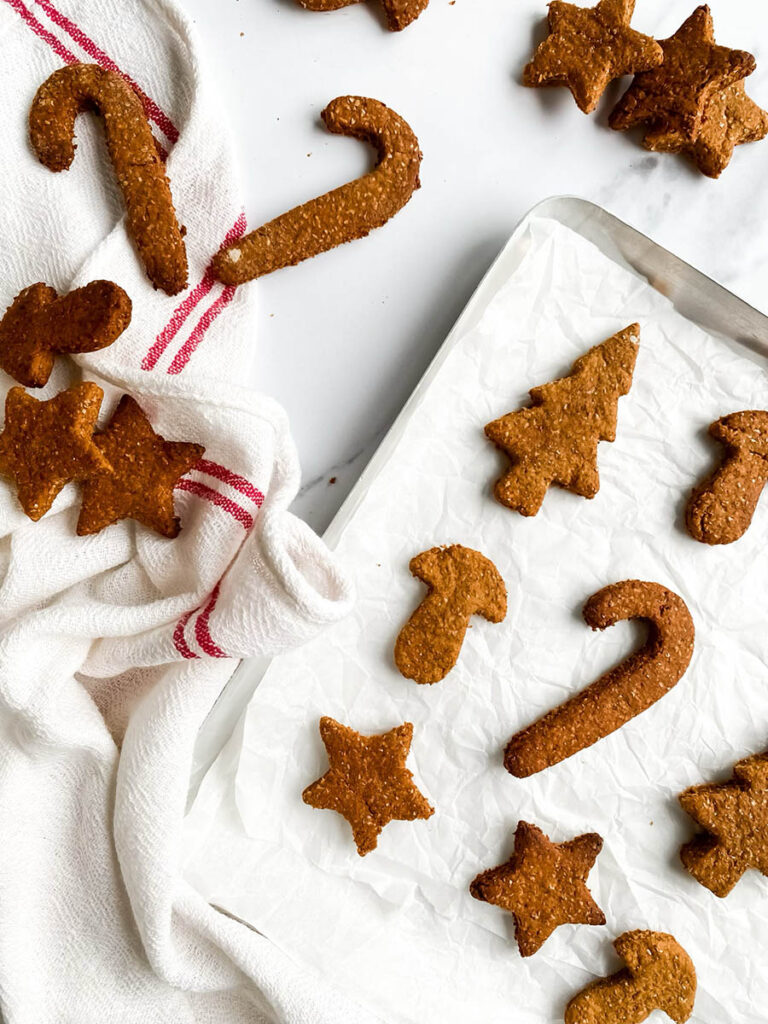
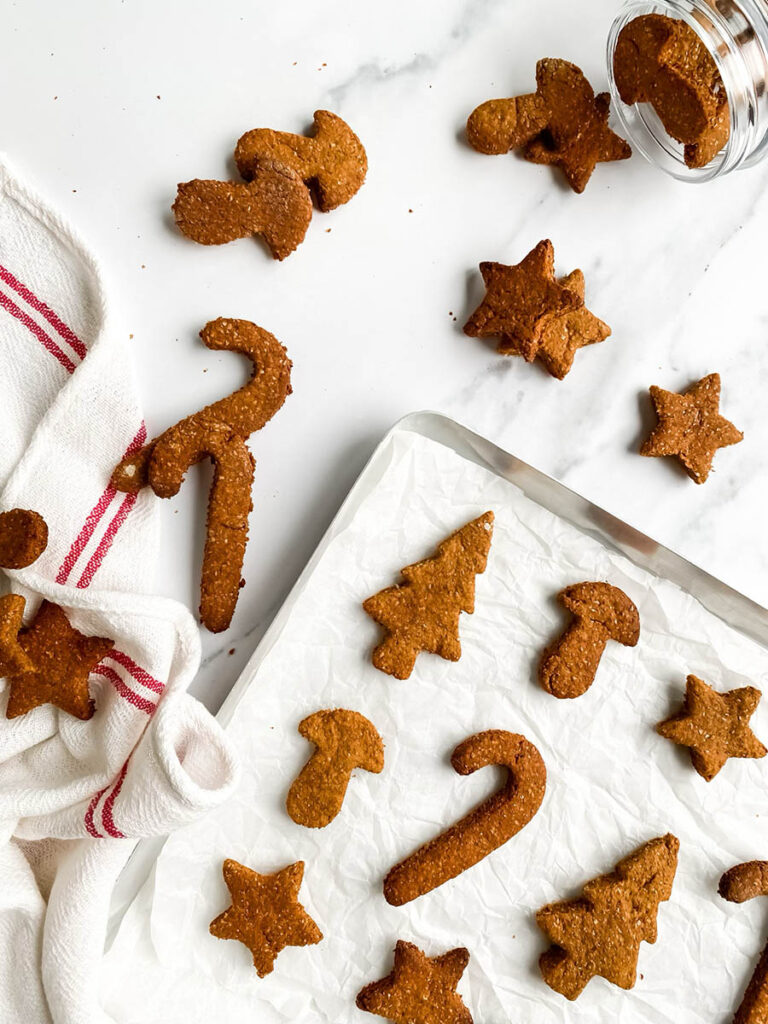
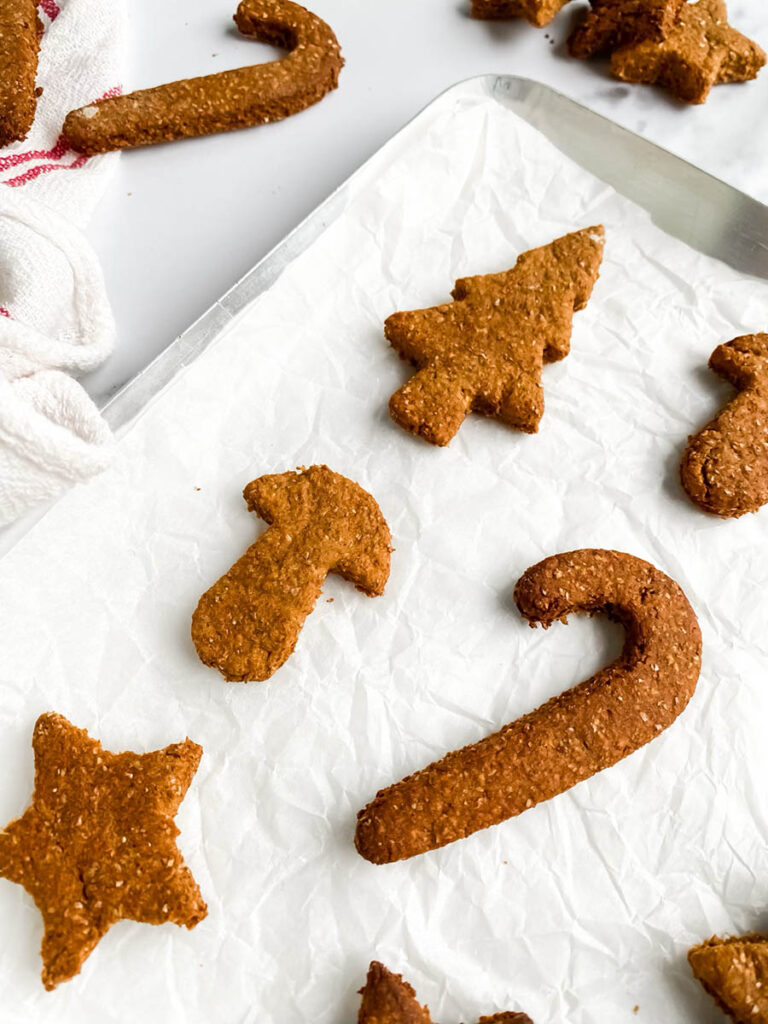
What ingredients do I need to make gingerbread cookies for dogs?
Each ingredient in the gingerbread dog treats recipe serves a specific purpose, both for flavor and for keeping the treats safe and nutritious for your pup. Here’s a look at how each ingredient contributes:
- Whole Wheat Flour: This grain flour is high in fiber and nutrients, like protein and essential vitamins, making it a hearty base for the cookies. Whole wheat flour provides structure to the dough, helping the cookies hold their shape while delivering a good amount of energy and keeping your dog feeling full or you could also use gluten free oat flour;
- Ground Ginger: Not only does ginger add the classic gingerbread aroma to these gingerbread cookies for dogs, but it’s also great for dogs’ digestive health. Ginger can help soothe upset stomachs, reduce inflammation, and even combat nausea, making it a perfect spice for a holiday treat;
- Ground Cinnamon: Just a small amount of cinnamon is safe for dogs and adds a lovely, festive flavor. Cinnamon also has antioxidant properties and may aid in blood sugar regulation, which is beneficial if you’re treating your dog to occasional baked goodies;
- Molasses: Unsulfured molasses is rich in nutrients like iron, calcium, and magnesium, and it adds a natural sweetness to the cookies without overwhelming sugar. Used sparingly, it enhances the flavor and aroma, making the treats more appealing without compromising health. Some recipes call for pumpkin instead;
- Water: Water helps to bind the ingredients and achieve the right dough consistency. It’s also essential for baking to avoid overly dense cookies, giving them a slight softness that’s easier on your dog’s teeth;
- Vegetable Oil: A small amount of oil ensures the cookies bake with a good texture and keeps them from drying out. It provides healthy fats, which are beneficial for a dog’s coat and skin and helps the cookies stay chewy and appealing.
These ingredients together create balanced gingerbread dog biscuits that are festive, aromatic, and health-conscious. Each component plays a role in making the treats not only tasty but also safe for your doggy companion.
How do I make gingerbread cookies for dogs?
Making these gingerbread cookies for dogs is as easy as it gets when it comes to the realm of doggie bites.
Start by preheating your oven to 160°C and getting a baking sheet ready with some parchment paper so the cookies don’t stick. In one bowl, mix up all your dry ingredients: the whole wheat flour, ginger, and cinnamon and just stir until everything looks nicely blended. In a larger bowl, combine the molasses, vegetable oil, and water, giving it a good stir until it’s smooth and syrupy. Now, gradually add your dry mix into the wet, stirring as you go until you get a dough that holds together. If it’s a bit sticky, sprinkle in a little more flour, and if it’s too dry, add a touch more water.
Once your dough is ready, flour your surface and roll it out to about 6mm (or 1/4 inch) thick. Grab some fun cookie cutters – bone shapes are always a hit, but it’s Christmas so consider it accordingly! – and cut out your cookies, placing them on the lined baking sheet. Pop them into the oven and bake for about 20 minutes, or until they’re firm to the touch.
Let the cookies cool completely before sharing them with your dog – they’ll love the smell and taste, and you’ll love giving them a treat that’s homemade and healthy! Store any extras in an airtight container, and you’re all set.
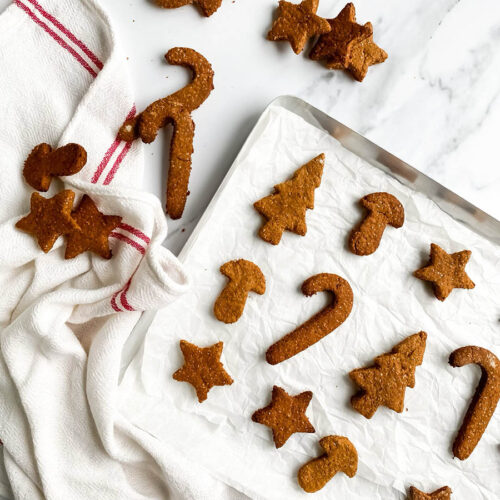
Easy Gingerbread Cookies For Dogs

Ingredients
- 180 g whole wheat flour
- 1 tbsp ground ginger
- ½ tsp ground cinnamon
- ¼ cup molasses
- ¼ cup water
- 2 tbsp vegetable oil
Instructions
- Preheat the oven to 160C, then line a baking tray with parchment paper.
- Whisk all the dry ingredients in a small bowl.180 g whole wheat flour, 1 tbsp ground ginger, ½ tsp ground cinnamon
- Whisk all the wet ingredients in a big bowl.¼ cup molasses, ¼ cup water, 2 tbsp vegetable oil
- Add the dry ingredients to the wet ingredients and combine.
- Roll out the dough to 6mm and cut into your favourite Christmas shapes.
- Place on the baking tray and bake for 20 minutes.
- Cool completely before feeding them to your dogs.
Notes
Shop the gingerbread cookies for dogs post

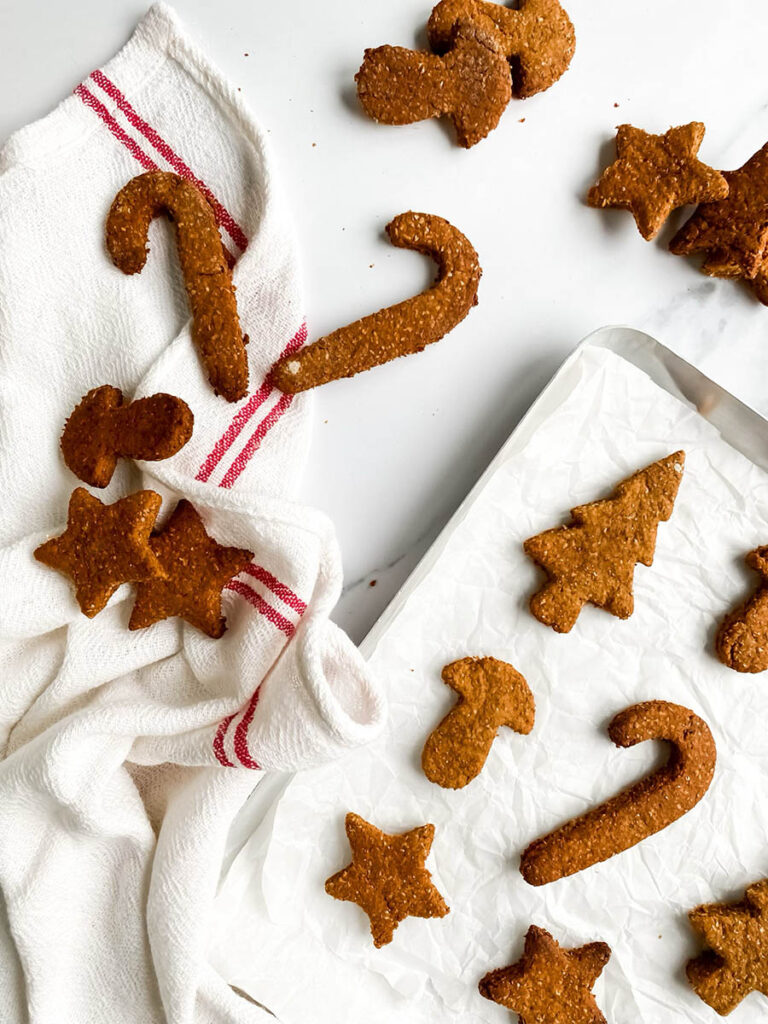
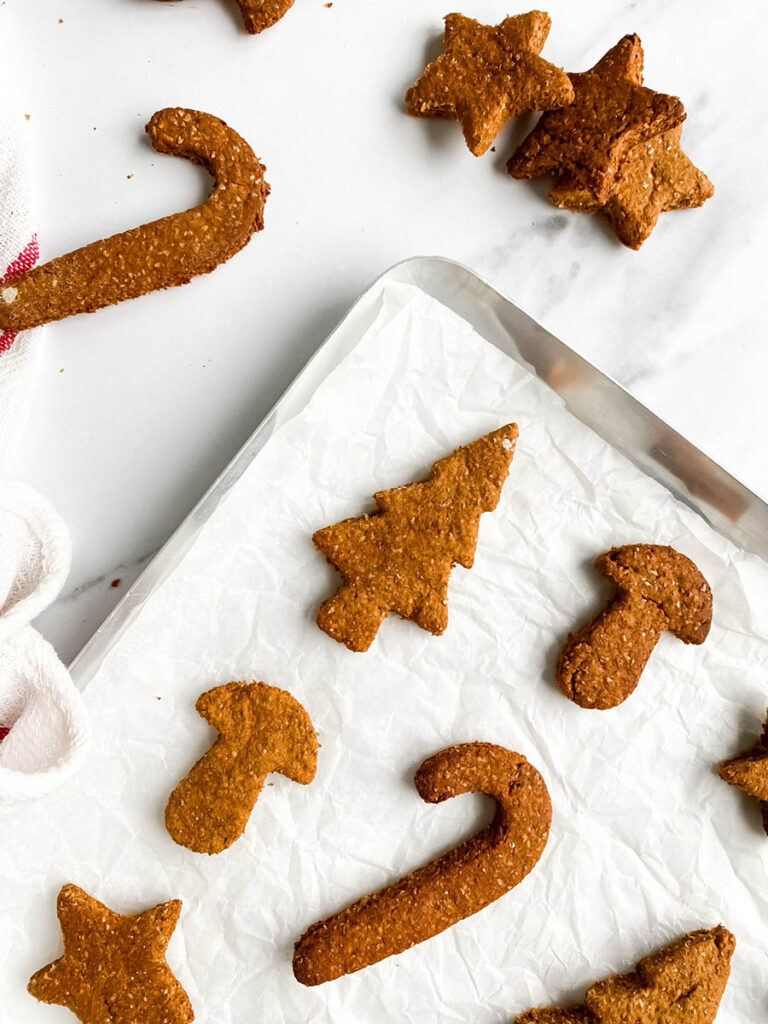
And there you have it: a delightful, dog-safe gingerbread cookies for dog recipe that brings the festive spirit to your furry friend’s treat stash! Not only are these gingerbread cookies for dogs packed with pup-approved flavors, but they’re also made from wholesome ingredients you can feel good about.
Perfect for sharing a bit of holiday cheer with your loyal companion, these treats are sure to make tails wag and hearts warm. So, grab your ingredients, a cozy apron, and maybe your dog’s favorite cookie cutter, and start baking some homemade gingerbread dog treats for your four-legged family member.
If you fancy checking out any other Christmas recipe, check out these:
- this gingerbread pavlova is to die for;
- we also have a gingerbread syrup, perfect for coffees and cocktails alike;
- otherwise the perfect Christmas drink, the eggnog;
- and lastly, the latest hot toddy mocktail!
Pin these gingerbread cookies for dogs recipe for later!


